ECAP contributes to the successful deployment of the IceCube Upgrade
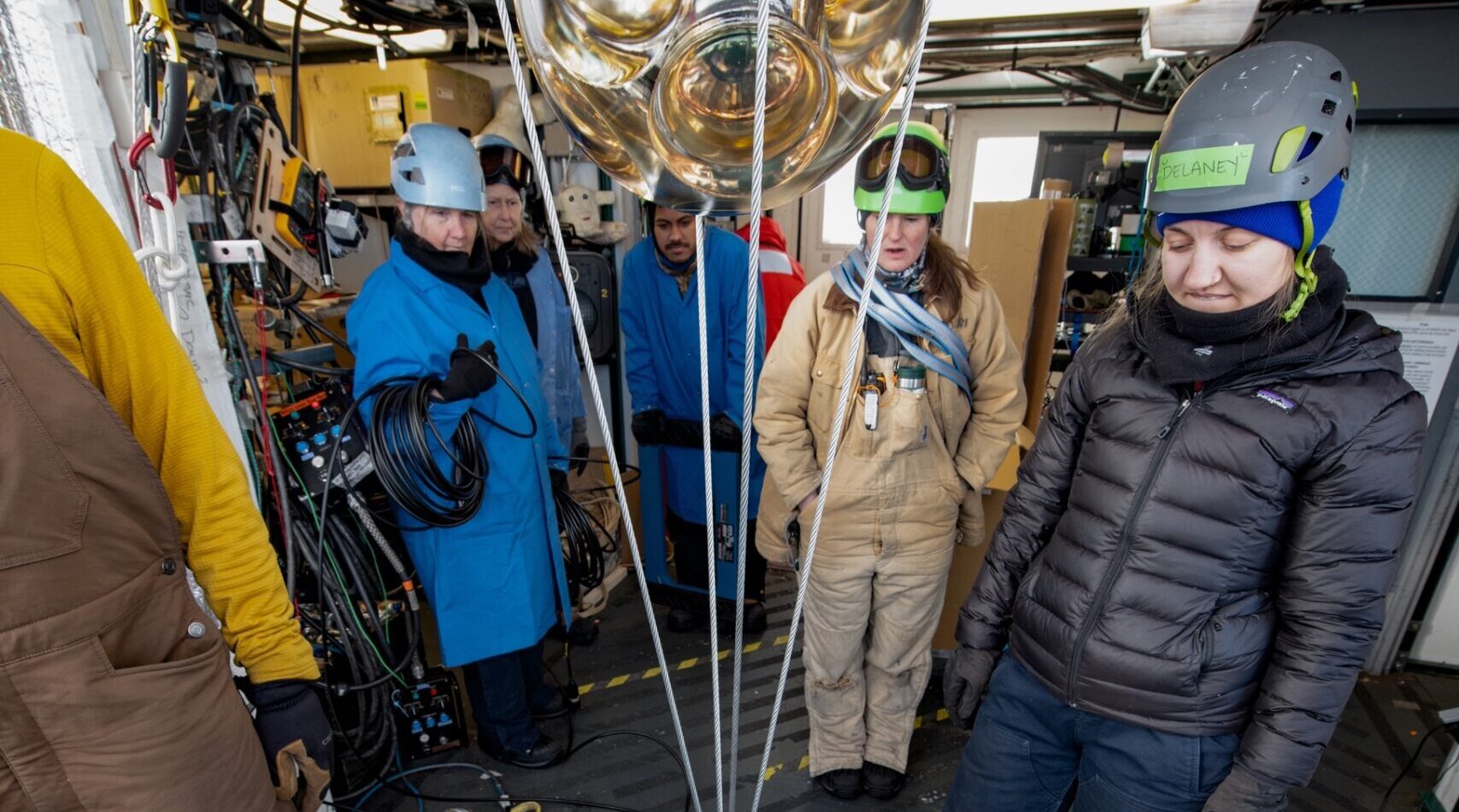
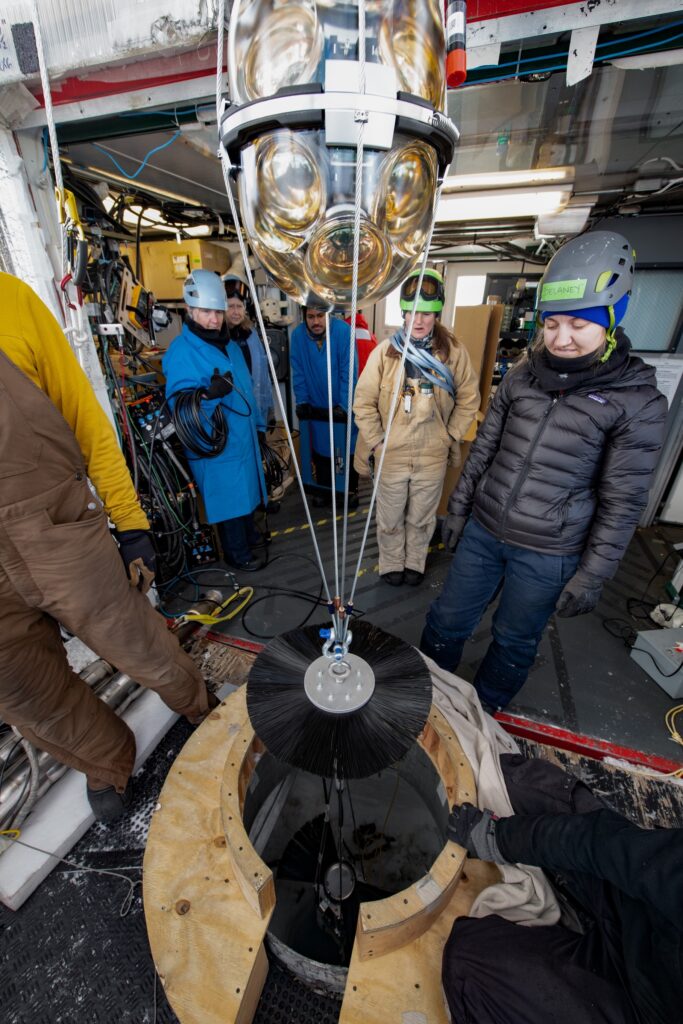
The IceCube Neutrino Observatory at the geographic South Pole has taken a major step forward with the successful deployment of the IceCube Upgrade. From November to February an international team installed more than 600 new optical sensors into the Antarctic ice, completing six of the seven planned Upgrade strings that now form a dense core of the detector array.
The Upgrade will significantly improve IceCube’s ability to detect low-energy, atmospheric neutrinos, crucial for precision studies of neutrino oscillations, and will add powerful new calibration capabilities to better understand the optical characteristics of the glacial ice that serves as the detector medium.
Although relatively new to the IceCube Upgrade project, the local research group led by Prof. Kopper contributed to several deployed instruments . As part of her doctoral work, Anna Eimer developed the so called “LOMlogger”, an innovative instrument that maps the vertical layering of the ice. The device combines a horizontally oriented laser light source (based on a „POCAM“ from TU Munich) with a sensor module two meters below (based on a „LOM“ design from the University of Madison-Wisconsin, USA), measuring the intensity of scattered light to reveal subtle ice structure.
Commissioning of the new detector is now the top priority. Early efforts focus on measurements accessible only as the water in the boreholes refreezes, followed by detailed studies of detector geometry and performance. Once fully commissioned, the combined IceCube and Upgrade array will begin an ambitious multi-year science program.