The Pacific Ocean Neutrino Experiment
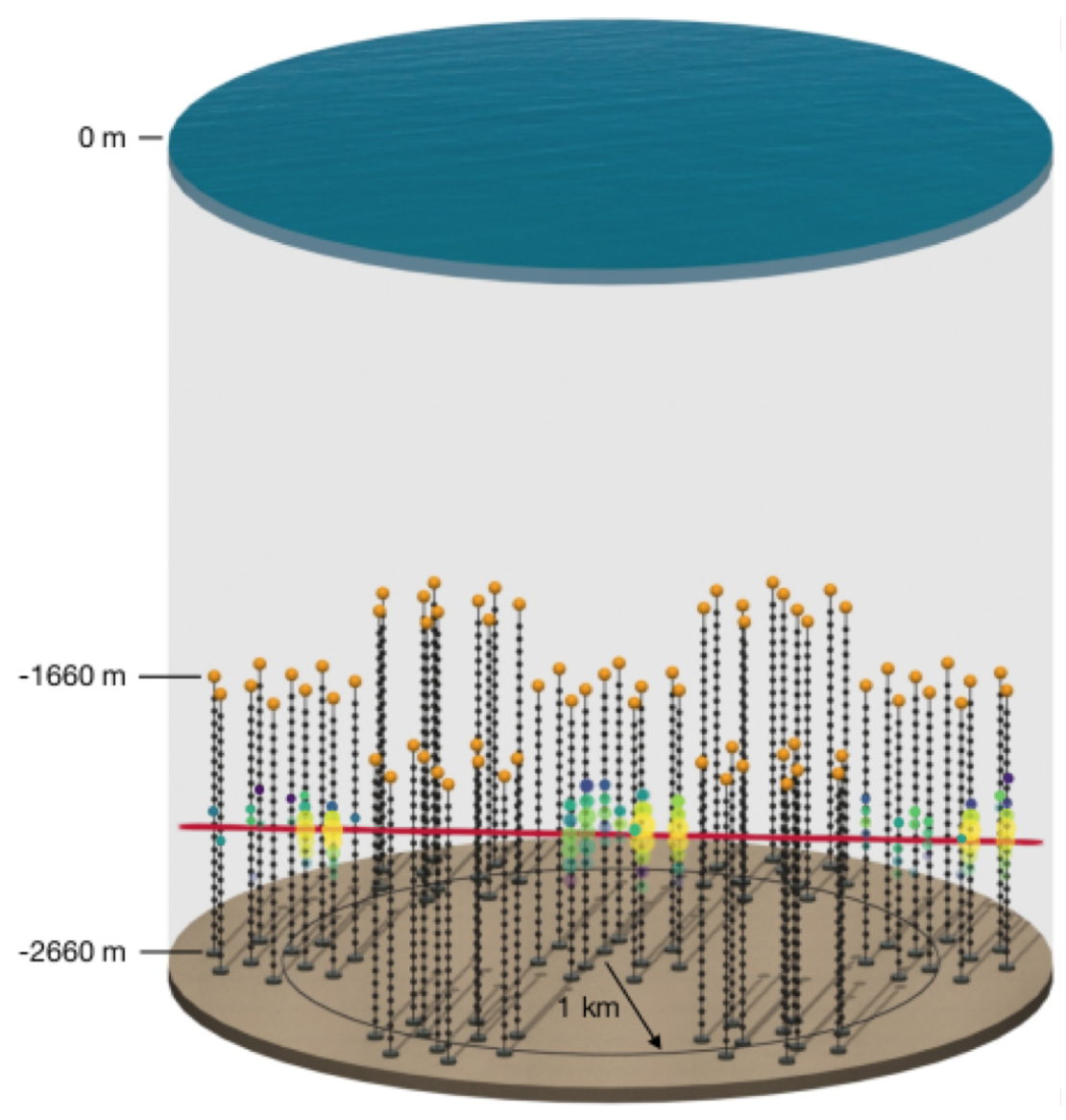
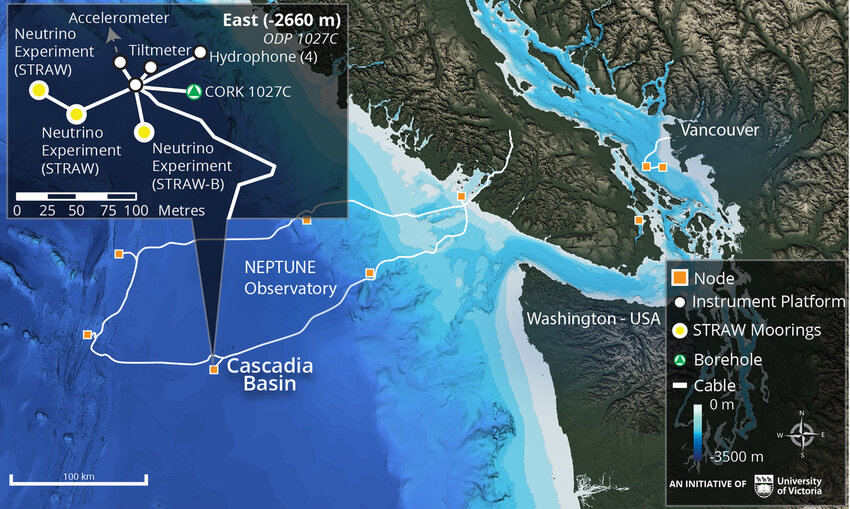
The Pacific Ocean Neutrino Experiment (P-ONE) is a novel detector initiative to build a large-volume neutrino array in the Pacific Ocean. In collaboration with Ocean Networks Canada, P-ONE aims to instrument more than a cubic kilometer of water using state-of-the-art sensor technologies to achieve unprecedented performance in detecting high-energy neutrinos and their sources.
ECAP is an important part of this project through the group of Prof. Claudio Kopper, developing a water tank measurement system for optical characterization of sensors, and software that collects and processes data which helps ensure the experiment operates accurately. This includes experimental laser systems and creating computer models of light and sound devices that measure water conditions and track the detector’s position in real time. ECAP is further a major contributor to building software for controlling and reading out the P-ONE detector and analyzing its data.
For more information, contact us or visit the official P-ONE website at: https://www.pacific-neutrino.org/